A pipeline site in rural Arkansas had been impacted by a diesel fuel release from a leaking pipeline. The subsurface conditions were complex, and traditional methods were not giving our clients the information they needed to design a remediation plan.
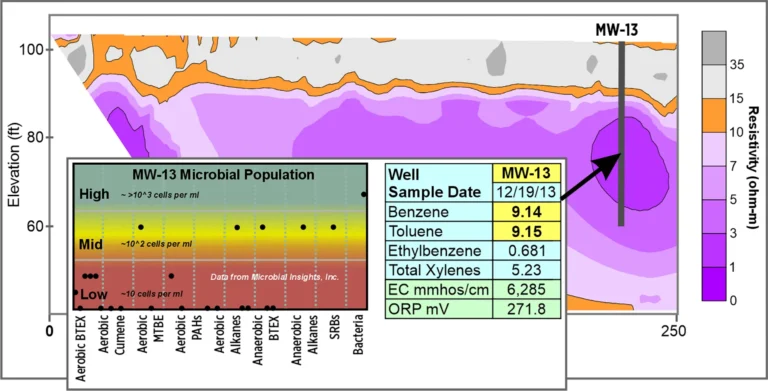
We tried something different: a scan-first approach. Aestus’ GeoTrax Survey™ specialty electrical resistivity imaging informed horizontal and vertical extents of impacted zones as well as detected unexpectedly high electrical conductivity, which suggested significant levels of bioactivity. DNA testing by Microbial Insights Laboratory confirmed it: hydrocarbon-degrading bacteria were thriving. The graphic below shows our electrical resistivity imaging (note the purple zones with very low electrical resistivity; i.e., high conductivity) integrated with the results from the targeted drilling in the most conductive zone.
Our data integration, interpretation, and presentation helped our client negotiate a Monitored Natural Attenuation (MNA) remedy—the first ever approved in Arkansas. No amendments or additional expenses were needed. Just nature doing its work, backed by science.
Check out the conference proceedings from the recent Battelle Bioremediation Symposium.